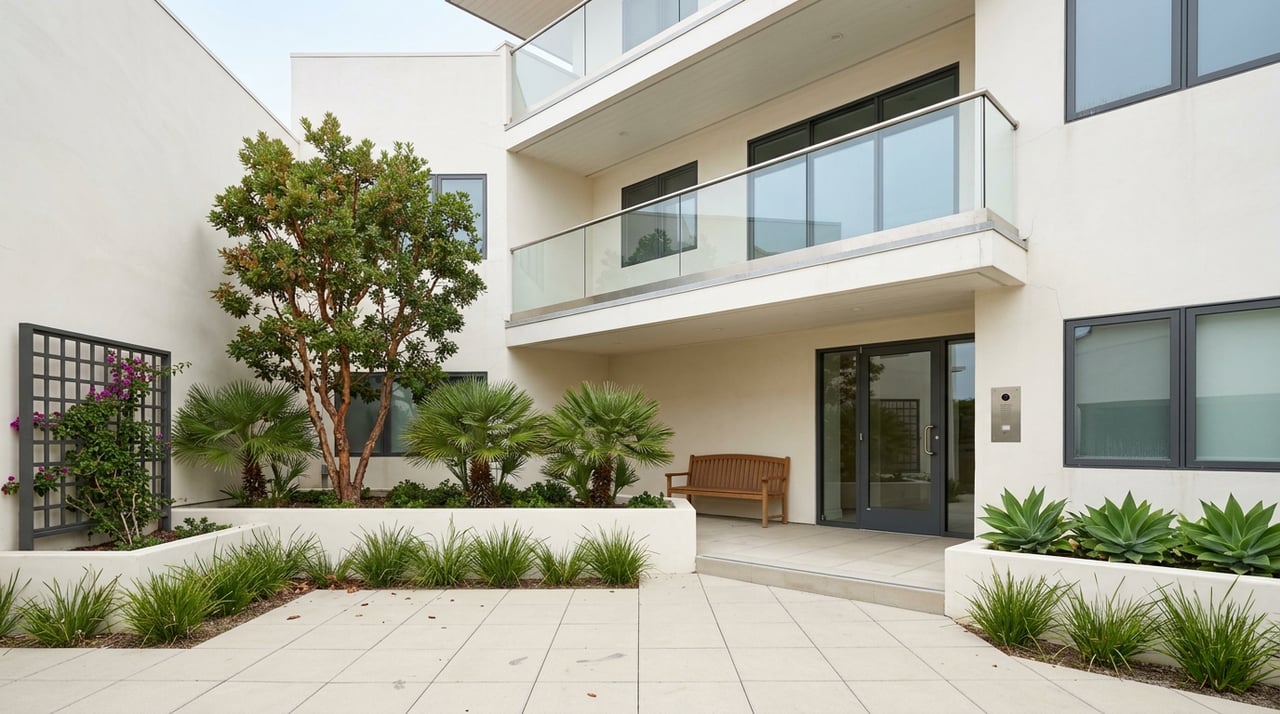
If you are thinking about buying a condo in Solana Beach, you are probably weighing a familiar coastal question: how do you get the lifestyle you want without stepping into the price tag of a detached home? In this market, condos can offer a more accessible entry point, but they also come with HOA rules, shared building responsibilities, and location-specific coastal considerations. This guide walks you through the key factors to review before you make an offer so you can move forward with more clarity and confidence. Let’s dive in.
Solana Beach condo market at a glance
If you are comparing condos to single-family homes in Solana Beach, the price difference is usually the first thing you notice. According to March 2026 MLS data for Solana Beach, attached and townhouse-condo homes had a year-to-date median sales price of $1,492,500, while detached homes were at $3,200,000.
That gap helps explain why many buyers focus on condos when they want a coastal address, beach access, and lower maintenance than a detached property. At the same time, Solana Beach remains a high-cost market with relatively limited inventory. The same MLS report shows 30 median days on market, 2.8 months of inventory, and 97.6% of original list price received for attached homes.
In practical terms, that means you should be ready to evaluate opportunities quickly, but not casually. Condo value here is not just about price per square foot. It is also about the building, the HOA, and the exact location within Solana Beach.
Location matters more than you think
In Solana Beach, condo living is closely tied to how you plan to use the area day to day. The city describes itself as a north-coast community with suburban neighborhoods and urban amenities around Cedros Avenue and Historic Highway 101, along with biking, bus service, and COASTER rail access. For many buyers, that means convenience can carry just as much weight as square footage.
A building that looks similar on paper can feel very different depending on its setting. You may want quick beach access, easier commuting, less dependence on a car, or a location near shopping and dining. Parking, storage, and walkability often become bigger factors once you narrow your search.
It also helps to understand the city’s physical layout. Solana Beach’s shoreline is relatively short and largely built out, with existing houses and condominiums along the coast, according to the city’s shoreline report. That means many condo options are in established communities rather than brand-new developments.
Access, transit, and daily convenience
Before buying, think through how you will actually live in the space and use the neighborhood. A few location questions can make a big difference:
- How close is the building to beach access points like Fletcher Cove, Del Mar Shores, Seascape Surf, or Tide Beach Park?
- How convenient is it to Highway 101, Lomas Santa Fe Drive, or I-5?
- Is parking assigned, limited, covered, or guest-friendly?
- Would you use local transit, including the COASTER service between Oceanside and downtown San Diego?
If you are relocating or buying a second home, these practical details matter just as much as finishes inside the unit.
Coastal climate is part of the experience
Solana Beach also has a distinct coastal environment. The city notes that fog is common in May and June, though it usually burns off by midday, as outlined on its community page. That may not change your purchase decision, but it can shape how a home feels across different seasons, especially if views, natural light, or outdoor living are high on your list.
Review the HOA with care
One of the biggest differences between buying a condo and buying a detached home is that you are not just buying the unit. You are also buying into an HOA’s budget, maintenance approach, rules, and long-term planning.
Under California Civil Code Section 4525, a seller of a condo interest must provide important association documents. These include governing documents, annual budget materials, current assessments, unpaid charges, unresolved violation notices, requested board minutes, rental or leasing prohibition statements, and the latest inspection report.
That package can tell you far more than the listing ever will. It can reveal whether the HOA is proactive, financially steady, and transparent, or whether there may be deferred maintenance, policy conflicts, or future costs on the horizon.
What to check in the budget and reserves
Your HOA review should go beyond the current monthly dues. The annual budget report must summarize reserves, reserve funding, loans, insurance, and whether special assessments may be needed, as required by California Civil Code Section 5300.
For Solana Beach condos, reserve strength is especially important because coastal buildings can face higher exterior maintenance demands over time. You will want to know:
- What are the current monthly dues?
- What do those dues cover?
- How often have dues increased?
- How much is held in reserves?
- Are there any HOA loans or major obligations?
- Is the board anticipating special assessments?
Reserve planning is also regulated. Under California Civil Code Section 5550, the board must visually inspect major reserve components at least every three years and review the reserve study annually. The law also limits how much an HOA can generally raise regular assessments in a fiscal year without member approval and how large special assessments can be relative to budgeted gross expenses.
For you as a buyer, this matters because a low monthly HOA fee is not always a positive sign. In some cases, it may mean reserves are underfunded or major work is being pushed off.
Rules can shape your ownership experience
Governing documents also help you understand how the building operates day to day. If you are planning to live in the condo full time, use it part time, or hold it as an investment, the rules matter.
Review the documents for policies on:
- Long-term rentals
- Short-term rental restrictions
- Pets
- Parking
- Storage
- Renovation approvals
- Occupancy or use limitations
Board minutes can also be useful because they may show how rules are enforced in practice. If you plan to rent the condo, confirm both the HOA rules and any applicable city requirements, including local short-term vacation rental and transient occupancy tax rules referenced in the research.
Understand financing and insurance early
Not every condo project works equally well for every loan type. The annual budget report must disclose whether the project is FHA- or VA-approved, according to California Civil Code Section 5300. If you are using financing, it is smart to verify project eligibility early rather than after you are under contract.
Insurance is another area where condo buyers should look closely. The HOA insurance summary must address property, liability, earthquake, flood, and fidelity policies. The same legal disclosure framework also warns that the HOA master policy may not cover interior improvements and may leave owners responsible for deductibles.
That means you should not assume the association’s coverage fully protects your unit or your personal exposure. Ask what the master policy covers, where owner responsibility begins, and whether your lender has any project-specific insurance requirements.
For a new condo project or a condo conversion, the California Department of Real Estate public report is another important document to review because it includes material disclosures such as CC&Rs, assessments, and costs.
Coastal location brings extra maintenance questions
In Solana Beach, coastal proximity can be a major draw, but it also comes with added due diligence. The city’s Marine Safety Department oversees beach and bluff safety along the local coastline, and the city reports long-term bluff erosion averaging about 0.4 feet per year, with actual conditions varying based on storms, runoff, and wave activity, according to its marine safety information.
If a condo is close to the beach or on or near a bluff, this should be part of your evaluation. The key issue is not just views or beach access. It is also slope stability, drainage, exterior maintenance, and the association’s long-term planning for site-related repairs.
Why parcel-level review matters
The city states that the entire jurisdiction lies within the Coastal Zone, and building permits must be reviewed and approved by the California Coastal Commission through the city’s planning process. The planning pages also reference bluff-retention permits and local hazard maps, including ESHA and very high fire hazard severity zones.
For buyers, this means broad assumptions are not enough. A condo community near the coast may require a more detailed, parcel-level review of permits, reports, and maintenance history. If a property is bluff-adjacent or especially close to the shoreline, ask whether there are recent geotechnical reports, bluff-related plans, or known drainage concerns.
Beach work can affect access and use
Solana Beach is also in the middle of long-term shoreline management. The city’s beach sand replenishment project is designed to widen portions of the shoreline, with future renourishment planned roughly every 10 years. The city notes that this work can involve heavy equipment, temporary closures, fencing, water turbidity, nighttime activity, and temporary impacts to areas such as Fletcher Cove parking and beach access points.
That does not mean you should avoid coastal condos. It simply means shoreline work is an ongoing part of living in this market. If easy beach access is central to your lifestyle, ask how recent or planned work may affect parking, noise, and access near the building.
A smart condo buyer checklist
Before making an offer on a Solana Beach condo, focus on these three categories.
Financial questions
- What are the monthly HOA dues, and what is included?
- How strong are the reserves?
- When was the last reserve study and annual review?
- Are there any planned special assessments?
- Does the HOA carry loans or other long-term obligations?
Lifestyle and rules questions
- Are rentals allowed, and under what terms?
- Are there limits on pets, parking, or storage?
- Do you need approval for renovations or interior changes?
- Is the project eligible for your intended loan type?
Building and site questions
- Is the property on or near a bluff?
- Are there drainage, erosion, or geotechnical concerns?
- Has the HOA deferred any major repairs?
- How does shoreline work affect access, parking, or beach use nearby?
The bottom line for Solana Beach condo buyers
Buying a condo in Solana Beach can be a smart way to enjoy a coastal location with a lower entry point than many detached homes, but the right purchase depends on more than the unit itself. The strongest opportunities usually come from the right combination of location, HOA financial health, building condition, and realistic expectations about coastal maintenance.
If you are comparing condo options in Solana Beach and want a grounded, strategic review of what to look for, Melissa Catanzaro can help you evaluate the details that matter before you commit.
FAQs
What should you review in HOA documents before buying a condo in Solana Beach?
- You should review the governing documents, annual budget, reserve information, assessments, insurance summary, board minutes, violation notices, rental restrictions, and the latest inspection-related materials required under California law.
How much do condos cost in Solana Beach compared with detached homes?
- Based on March 2026 MLS year-to-date data, attached and townhouse-condo homes had a median sales price of $1,492,500, compared with $3,200,000 for detached homes in Solana Beach.
Why does coastal location matter when buying a Solana Beach condo?
- Coastal location can affect beach access, parking, commute convenience, HOA maintenance needs, bluff or erosion exposure, and the impact of shoreline management work near the property.
Can HOA dues and special assessments affect condo affordability in Solana Beach?
- Yes. Monthly dues, reserve funding, deferred maintenance, HOA loans, and possible special assessments can all affect your true cost of ownership beyond the purchase price.
What financing issues should condo buyers check before making an offer in Solana Beach?
- You should confirm whether the project is eligible for your loan type, review the HOA’s insurance disclosures, and make sure the association’s documents support lender requirements for the condo project.